The catalogue

Books for a mind that has to work under load.

The Human OS Library publishes manuals, not pep talks. The Disciplined Mind is a four-volume set. Attention Wars stands on its own as a reported investigation. Four further titles are in production across the practical track and popular science.

Series

The Disciplined Mind

A four-volume set on emotional command, attention, identity design, and decision quality. Read in order, or enter at the volume that matches the problem in front of you.

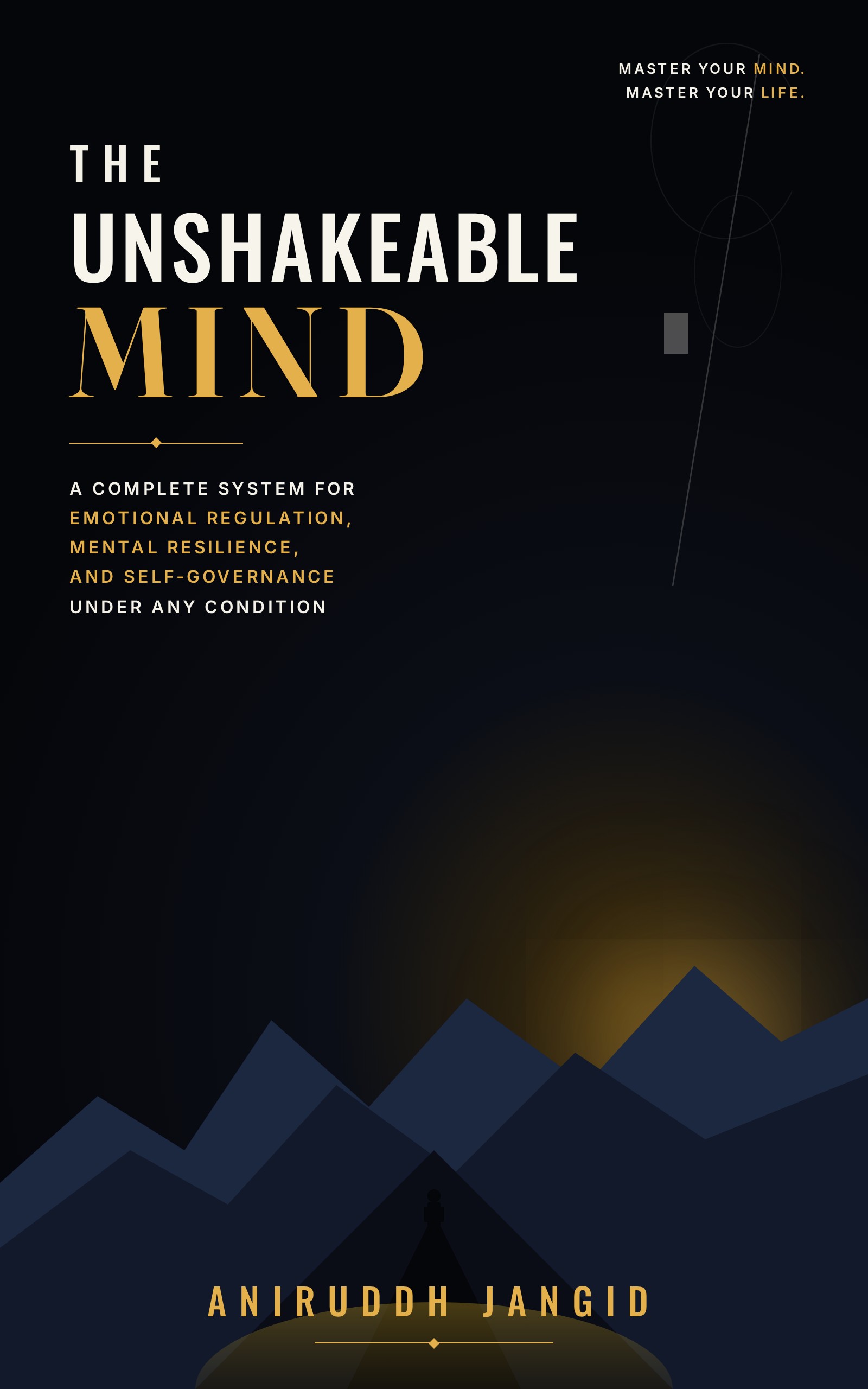
Cover of The Unshakeable Mind by Aniruddh Jangid

Volume 1 · Book 1 of 4, The Disciplined Mind

The Unshakeable Mind

A complete system for emotional regulation, mental resilience, and self-governance under any condition

A working system for remaining in command when emotion is loud. Regulation is treated as a skill that can be trained, measured, and run under pressure. Written for people who cannot wait for conditions to improve before they act.

ForProfessionals who need composure that holds in rooms, deadlines, and private hours alike.

Kindle Edition, also on Kindle Unlimited

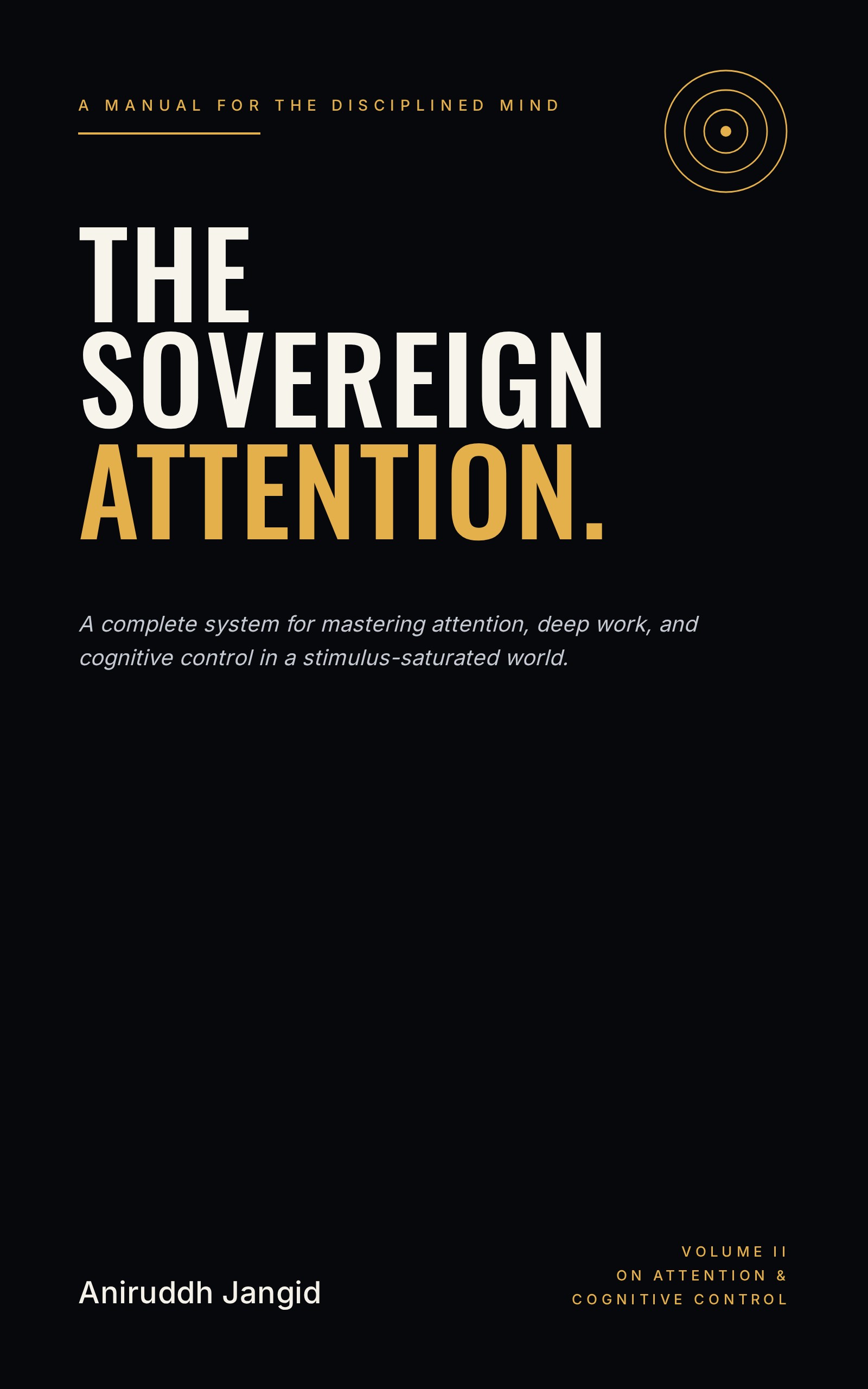
Cover of The Sovereign Attention by Aniruddh Jangid

Volume 2 · Book 2 of 4, The Disciplined Mind

The Sovereign Attention

A complete system for mastering attention, deep work, and cognitive control in a stimulus-saturated world

Attention is treated as the scarce input that every other form of work depends on. The book offers a complete protocol for deep work and cognitive control in an environment designed to interrupt you.

ForReaders who already know they are distracted, and want a system rather than another tip.

Kindle Edition, also on Kindle Unlimited

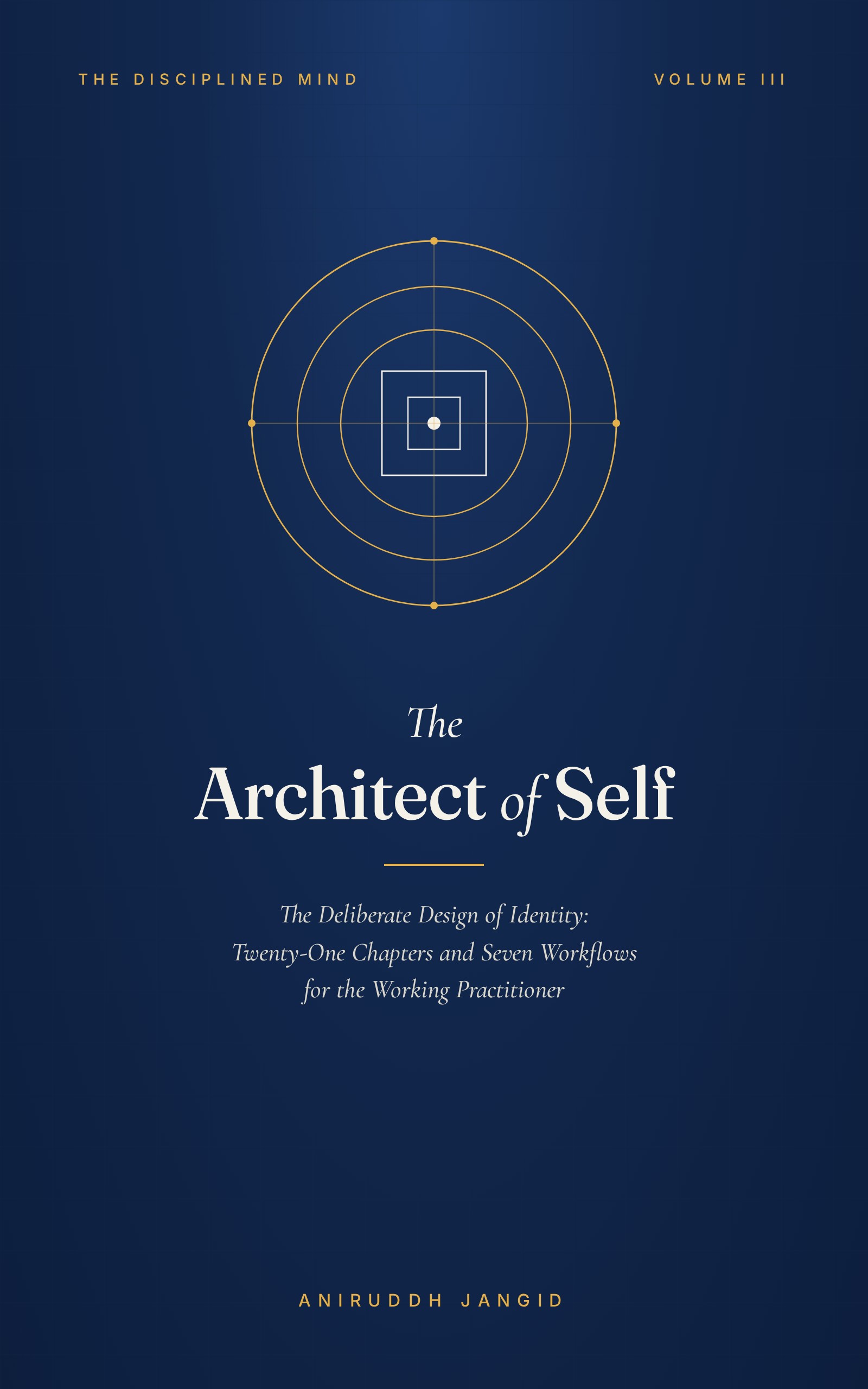
Cover of The Architect of Self by Aniruddh Jangid

Volume 3 · Book 3 of 4, The Disciplined Mind

The Architect of Self

The Deliberate Design of Identity: Twenty-One Chapters and Seven Workflows for the Working Practitioner

Identity is treated as something that can be specified, tested, and revised. Twenty-one chapters and seven workflows give a working practitioner a way to design who they are becoming, then live inside that design.

ForPeople who have outgrown borrowed identities and need a method for building their own.

Kindle Edition, also on Kindle Unlimited

Cover of The Anti-Regret Blueprint by Aniruddh Jangid

Volume 4 · Book 4 of 4, The Disciplined Mind

The Anti-Regret Blueprint

A decision operating system for building a life you will be proud of when you look back

A decision operating system for the long view. The book is concerned with the quality of choices that compound, and with the person who will have to live with them.

ForReaders standing at forks that will still matter in ten years.

Kindle Edition, also on Kindle Unlimited

Standalone

Attention Wars

A reported investigation into the business of capturing a mind, set apart from the series so the two modes of work stay clear.

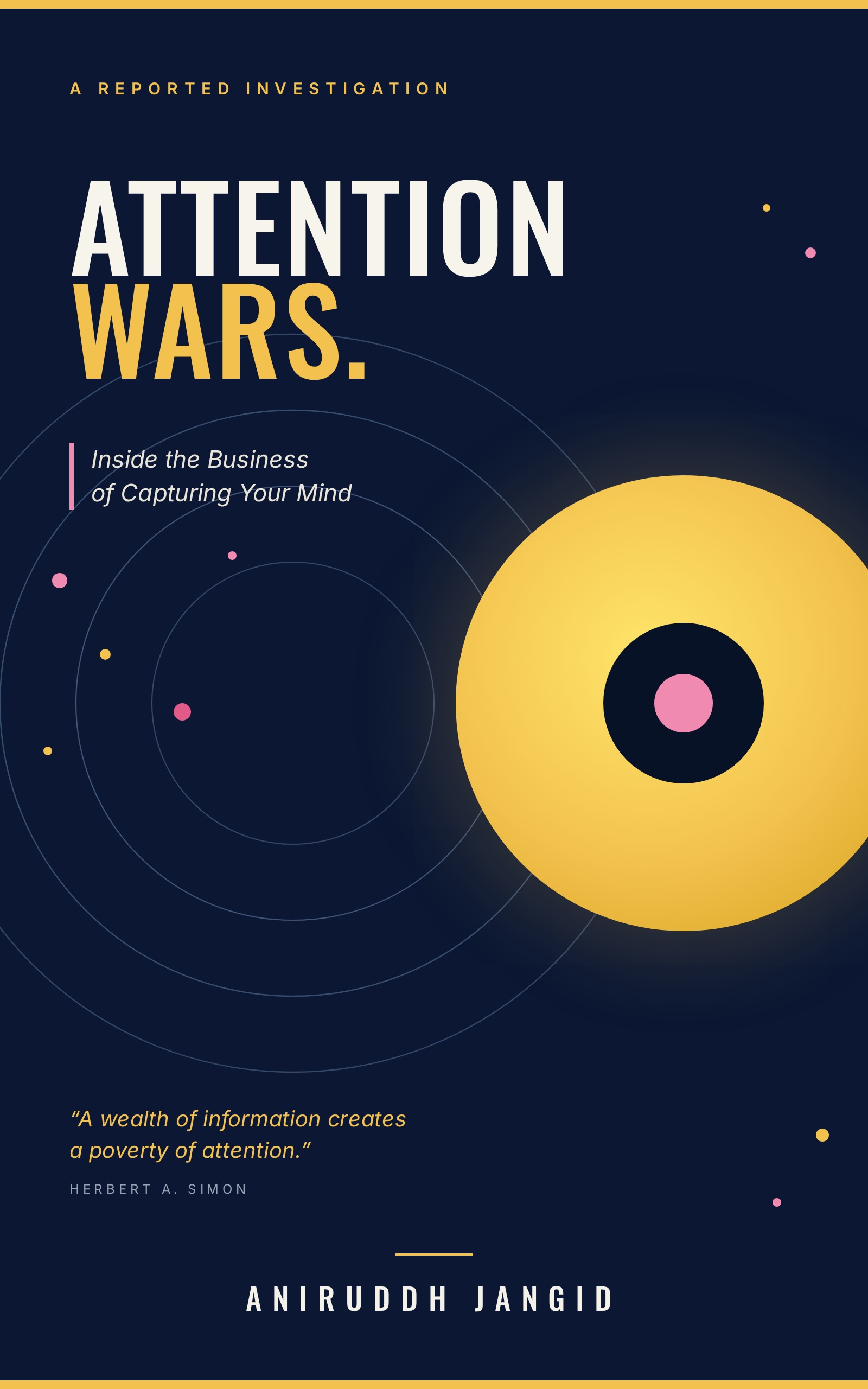
Cover of Attention Wars by Aniruddh Jangid

Standalone

Attention Wars

Inside the Business of Capturing Your Mind

A reported investigation into the industry that treats human attention as inventory. The book looks at how capture is designed, sold, and scaled, and what that design does to a mind that wants to remain its own.

ForReaders who want to understand the market that is bidding for their focus.

Kindle Edition

In production

What is coming next

Four titles are in production across two tracks. One continues the practical work of The Human OS Library. One extends into popular science, on the engineered systems that run an ordinary day.

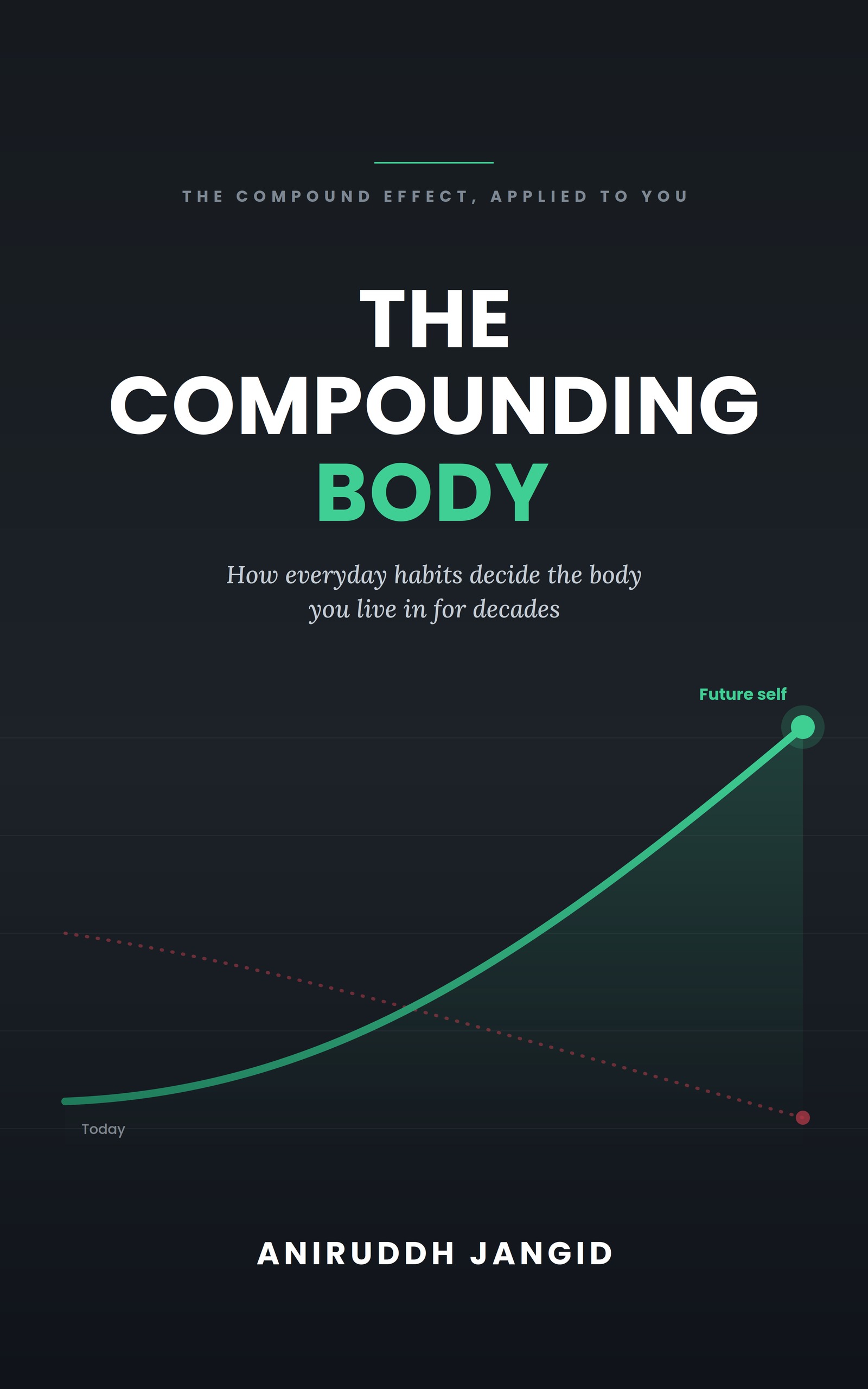
Cover of The Compounding Body by Aniruddh Jangid
In production

In editing · The Compounding Series

The Compounding Body

How everyday habits decide the body you live in for decades

Most books about the body sell a transformation. This one argues that transformations are the least reliable route to a body that still works at sixty. The Compounding Body treats physical capacity the way a serious operator treats a plant: an asset with a build cost, a maintenance charge, a depreciation schedule, and a set of dependencies that are easy to ignore and expensive to restore. The inputs that produce a durable body are unremarkable, well established, and almost universally abandoned before they have had time to work. The problem is not knowledge. It is a design failure in how the inputs are scheduled against a real life.

  • Sleep, load, protein, and walking account for most of the result. Everything else is optimisation on a foundation that usually does not exist.
  • Calibrate the programme against your worst realistic week, because that week decides whether it survives.
  • Maintenance costs a fraction of the build. Most people abandon capacities they could have held because they priced upkeep at the build rate.

For Working professionals who have started and abandoned several programmes and suspect, correctly, that the programmes rather than they were the problem.

Notify me on release

Your address is used only for this list. No sharing. Unsubscribe at any time.

Cover of The Law of Fading by Aniruddh Jangid
In production

Manuscript complete · The Human OS Library

The Law of Fading

Why abundance kills value and how to live above trends

The Law of Fading is about decay as a design condition rather than a disappointment. Fitness fades. Skill fades. Fluency, closeness, trust, concentration, and tolerance for difficulty all fade, and they fade under exactly the conditions ordinary life supplies by default. Treating human capacities as achievements, which are permanent, rather than as rented capabilities, which are not, is the source of a specific and widespread form of disappointment. The book works through the practical consequences: how to separate build cost from maintenance cost, how to budget a finite maintenance capacity, how to release things deliberately, and how to test capacities before something important asks for the thing you no longer have.

  • Fading is not failure. It is the normal behaviour of every capacity a human being holds.
  • The right question is not what have I achieved, but what am I currently maintaining.
  • Capacities degrade invisibly, then fail publicly under test. Schedule the tests yourself.

For Anyone who has looked at something they built years ago and realised they could no longer do it.

Notify me on release

Your address is used only for this list. No sharing. Unsubscribe at any time.

Cover of The Hidden Cost of Comfort by Aniruddh Jangid
In production

In design · The Compounding Series

The Hidden Cost of Comfort

How ease reshapes the body and brain, manufactures self-interference, and quietly trades your aliveness

This is not a book in praise of hardship. It is a book about accounting. Comfort is priced as though it were free, and the price tag omits the largest line item: the capacity that quietly leaves when the demand it served is removed. The Hidden Cost of Comfort traces the mechanism across navigation, boredom, food, payment, temperature, physical effort, and social friction. Most conveniences are worth taking. The problem is taking them without knowing the price. The prescription is deliberate selection rather than renunciation.

  • Human capacities are demand-dependent. Remove the demand for long enough and the capacity goes with it.
  • You judge your tolerance against a baseline that has already moved, which is why the decline registers as nothing.
  • Keep one activity in your life that is genuinely difficult and produces nothing.

For People who have noticed that ordinary difficulty feels harder than it used to, and have not been able to say why.

Notify me on release

Your address is used only for this list. No sharing. Unsubscribe at any time.

Cover of Invisible Engines by Aniruddh Jangid
In production

Volume III manuscript complete · The Invisible Engines Trilogy

Invisible Engines

How mathematics, physics, and chemistry equations quietly run our world

Invisible Engines is a departure from the practical track and the closest thing in this catalogue to straight popular science. Its subject is infrastructure in the widest sense: power, timing, logistics, networks, standards, and the institutional arrangements that hold them together. Successful infrastructure disappears. A system that works perfectly becomes invisible, and an invisible system is one that nobody funds, defends, or examines. The trilogy sets out to make these systems visible again. Volume III, The Weave, is complete.

  • Invisibility is the design goal of infrastructure and the source of its political fragility.
  • Coupling is discovered during failure. Dependencies that were always there become visible only when tested.
  • The most consequential decisions about modern life were made in technical committees, then hardened into permanence.

For Readers of popular science, and anyone who wants to understand why a ship in a canal empties shelves on another continent.

Notify me on release

Your address is used only for this list. No sharing. Unsubscribe at any time.

The published catalogue lives on Amazon.